
08 Nights 09 Days Muktinath Tour Package
Kathmandu - Nagarkot - Chitwan - Pokhara - Muktinath
|
3 Star Deluxe Hotel |
₹50,000 For Indian |
US $1300 |
|
5 Star Deluxe Hotel |
₹55,000 For Indian |
US $1500 |
|
Minium 5 pax. |
Trip Date |
Please chose own your continent date |
Muktinath मुक्तिनाथ
Muktinath is a sacred place both for Hindus and Buddhists located in Muktinath Valley (behind of the Grate Himalayan) at an altitude of 3,800 meters, on the way Annapurna Trekking route ,Mustang, Nepal. Mukti Kshetra (51 shakti pitham )which literally means the "place of liberation or moksha" or where the temple of Muktinath is situated, is mentioned in the Hindu Scriptures such as the Ramayana, Barah Purana and Skanda Purana. There are 108 sacred water spouts (springs) where pilgrims take a ritual bath. Nearby is a temple called Jwala Mai considered sacred and worshipped by both Hindus and Buddhists. An eternal blue flame keeps burning in the temple.Every year thousand of Hindus devotes comes to this Temple from around the world. This Temple is one of the famous holy places for Hindus & Buddies , so every year thousand of tourist visits this Temple. In this temple there is mix in culture Hindu God & Buddies priest (Jhum- buddies lady monk Aani ). Jhuma ( Priest) of this Temple is not allowed to marry.
The place partly owes its fame to the fossil stones, called Shaligram - considered holy by Hindus - found along the Kali Gandaki River. The fossil stones are said to represent Lord Vishnu in stone form. The temple dedicated to Lord Vishnu is simple in architecture and built in pagoda style. It is believed to have been constructed at the beginning of the 19th century. As the idol of Vishnu is considered to date from the 16th century.Many Hindu pilgrims from Nepal and India visit the site to worship Lord Vishnu . Buddhists call it Chumig Gyatsa, which in Tibetan means 'Hundred Waters'. Although the temple is has a Vaishnava origin, it is also revered in Buddhism.
Pashupati Nath Temple (UNESCO World Heritage Site)
पशुपतिनाथ मन्दिर
Pashupati Nath Temple, situated 5 km east of Kathmandu, the temple of Lord Shiva is considered one of the most sacred Hindu shrines in the world. Also it is one of the Biggest and famous Hindu Lord Shiva's Temple in the world. so every year thousands of Hindu pilgrimage & Tourist visit in the Temple . The two-tiered pagoda with golden roofs and 4 silver doors houses the sacred linga, or phallic symbol, of Lord Shiva. Chronicles indicate the temple existed before 400 A.D. It is listed under the UNESCO World Heritage Sites.
Guheswari or Guhyeshwari Temple गुह्येश्वरी मन्दिर
It also spelled Guheswari or Guhjeshwari, is one of the revered holy temples in Kathmandu, Nepal. This temple is dedicated to Adi Shakti. The temple is a Shakti Peetham near the Pashupatinath Temple on the banks of the Bagmati River ,where, according to mythology, a portion of Sati Devi, Lord Shiva’s consort, fell when a grief-stricken Shiva wandered aimlessly across the earth carrying her dead body on his shoulders following her self-immolation.
Swyambhunath Stupa (UNESCO World Heritage Site) श्वयम्भुनाथ
The Buddhist temple of Swyambhunath, situated on the top of a hillock ,3 km west of Kathmandu. It is the most ancient and enigmatic of all the holy shrines in Kathmandu valley. A collection of legends about the site, the 15th century Swyambhu Purana, tells of a miraculous lotus, planted by a past Buddha, which blossomed from the lake that once covered Kathmandu valley. The lotus mysteriously radiated a brilliant light, and the name of the place came to be Swyambhu, meaning 'Self-Created or Self-Existent'. Saints, sages and divinities traveled to the lake to venerate this miraculous light for its power in granting enlightenment. Atop Swyambunath hill is another fascinating temple called Shantipur, popularly known as the 'Palace of Peace'.We can see the panoramic view of Kathmandu over here.
Budhanilkantha ( Jal Narayan ) बुढानिलकन्ठ
The largest of Vishnu’s stone statues, (Budhanilkantha)Jal Narayan lies at the foothills of the Shivapuri hills, 8 km north of the Kathmandu city center. The large granite figure of Lord Vishnu, reclining on a bed of serpents known as ‘Nagas’, seems to float in a pond. This shrine dates back to the 5th century.
Swyambhunath Stupa (UNESCO World Heritage Site): ( श्वयम्भुनाथ ) The Buddhist temple of Swyambhunath, situated on the top of a hillock ,3 km west of Kathmandu. It is the most ancient and enigmatic of all the holy shrines in Kathmandu valley A collection of legends about the site, the 15th century Swyambhu Purana, tells of a miraculous lotus, planted by a past Buddha, which blossomed from the lake that once covered Kathmandu valley. The lotus mysteriously radiated a brilliant light, and the name of the place came to be Swyambhu, meaning 'Self-Created or Self-Existent'. Saints, sages and divinities traveled to the lake to venerate this miraculous light for its power in granting enlightenment. Atop Swyambunath hill is another fascinating temple called Shantipur, popularly known as the 'Palace of Peace'.We can see the panoramic view of Kathmandu over here.Nagarkot view point
Nagarkot is a scenic hill station located in the Bagmati Province, renowned for its panoramic sunrise and sunset views of the Himalayas, including Mount Everest on clear days. Situated just outside the Kathmandu Valley, it is a popular getaway for nature lovers, hikers, and travelers seeking a quiet retreat above the clouds. Offers sweeping vistas of several Himalayan ranges, making it one of the top viewpoints near the capital.Surrounded by lush pine forests and traditional hill villages with scenic walking and hiking trails.Features numerous resorts and viewing towers catering to overnight visitors looking to catch early morning mountain views.
Manakamana Temple मनकामना
Manakamana Temple (15 Minute by cable car- ropeway ride up to Hill)
The Manakamana Temple situated in the Gorkha district of Nepal is the sacred place of the Hindu Goddess Bhagwati, an incarnation of Parvati. The name Manakamana originates from two words, “mana” meaning heart and “kamana” meaning wish. Venerated since the 17th century, it is believed that Goddess Manakamana grants the wishes of all those who make the make the pilgrimage to her shrine to worship her. The Manakamana temple lies 12 km south of the town Gorkha. The temple is located on a distinguished ridge 4,272 ft above sea level.
Pokhara Programme पोखरा
Wake up Early in the morning drive to Sarangkot for Sunrise view (optional). Return to Hotel for breakfast and start your halfday sightseeing of Pokhara such as Bindvabashini Temple which is famous for hindu pilgrimage, the Davi’s fall locally known as Patale Chhango ( hell’s fall ); is lovely waterfall lying about two km south west of Pokhara Airport on the Siddartha Highway and Gupteswar Cave is a sacred cave, situated opposite of Davi’s fall the cave is almost 3 kms long and the picturesque Fewa, Begnas and Rupa lake enhanced its beauty. For the Mountain Lovers Pokhara offers the magnificient views of Mt Fish Tail locally name “Machhapuchre“ 5 peaks of Mt Annapurna, Dhaulagiri, Himanchuli and other peaks. Pokhara Valley is such a place in the World to provide such a dramatic views in the subtropical setting and its colorful bazaars. Later visit & take the opportunity to shop for souvenirs.
Itinerary
Day 01: Arrive in Kathmandu (1,400m) Upon arrival at Tribhuvan International Airport, meet our representative and transfer to your hotel. Enjoy a short tour briefing in the evening.
Overnight: Hotel in Kathmandu
Day 02: Kathmandu Valley Sightseeing After breakfast, embark on a full-day spiritual and cultural tour of Kathmandu. Visit Pashupatinath Temple, Guhyeshwari Temple, Budhanilkantha (Jal Narayan), and Swayambhunath Stupa (Monkey Temple). The evening is free for personal shopping or exploring Thamel.
Overnight: Hotel in Kathmandu
Day 03: Drive to Nagarkot (Approx. 1 Hour) After breakfast, take a scenic drive up to the hill station of Nagarkot. Spend the day relaxing and soaking in panoramic views of the Himalayan mountain ranges and surrounding valleys, including a stunning sunset.
Overnight: Hotel in Nagarkot
Day 04: Drive to Chitwan via Manakamana Temple (Approx. 150 km) After breakfast, depart for Chitwan. En route, stop at Kurintar to take a thrilling 15-minute cable car (ropeway) ride up to the sacred Manakamana Temple for darshan. Continue your drive to Chitwan National Park. In the evening, visit a local Tharu Village and enjoy a traditional Tharu cultural stick dance program.
Overnight: Jungle Resort in Chitwan
Day 05: Full Day Chitwan National Park Jungle Activities Wake up early for an exciting wildlife experience in Chitwan National Park:
Jungle Safari: Early morning Elephant-back safari deep into the park to spot one-horned rhinos, deer, and exotic birds.
River & Nature Walk: Enjoy a 45-minute guided nature walk through the grassland and forest upstream along the Rapti River, followed by a visit to the Elephant Breeding Centre and bird watching.
Canoe Ride: Take a peaceful dugout canoe ride down the Rapti River, spotting crocodiles basking along the riverbanks as you float back toward the camp.
Overnight: Jungle Resort in Chitwan
Day 06: Drive to Pokhara (Approx. 135 km) After breakfast, take a scenic drive along the river valleys to the lake city of Pokhara. Check into your hotel and enjoy the rest of the evening at leisure walking along the Lakeside promenade.
Overnight: Hotel in Pokhara
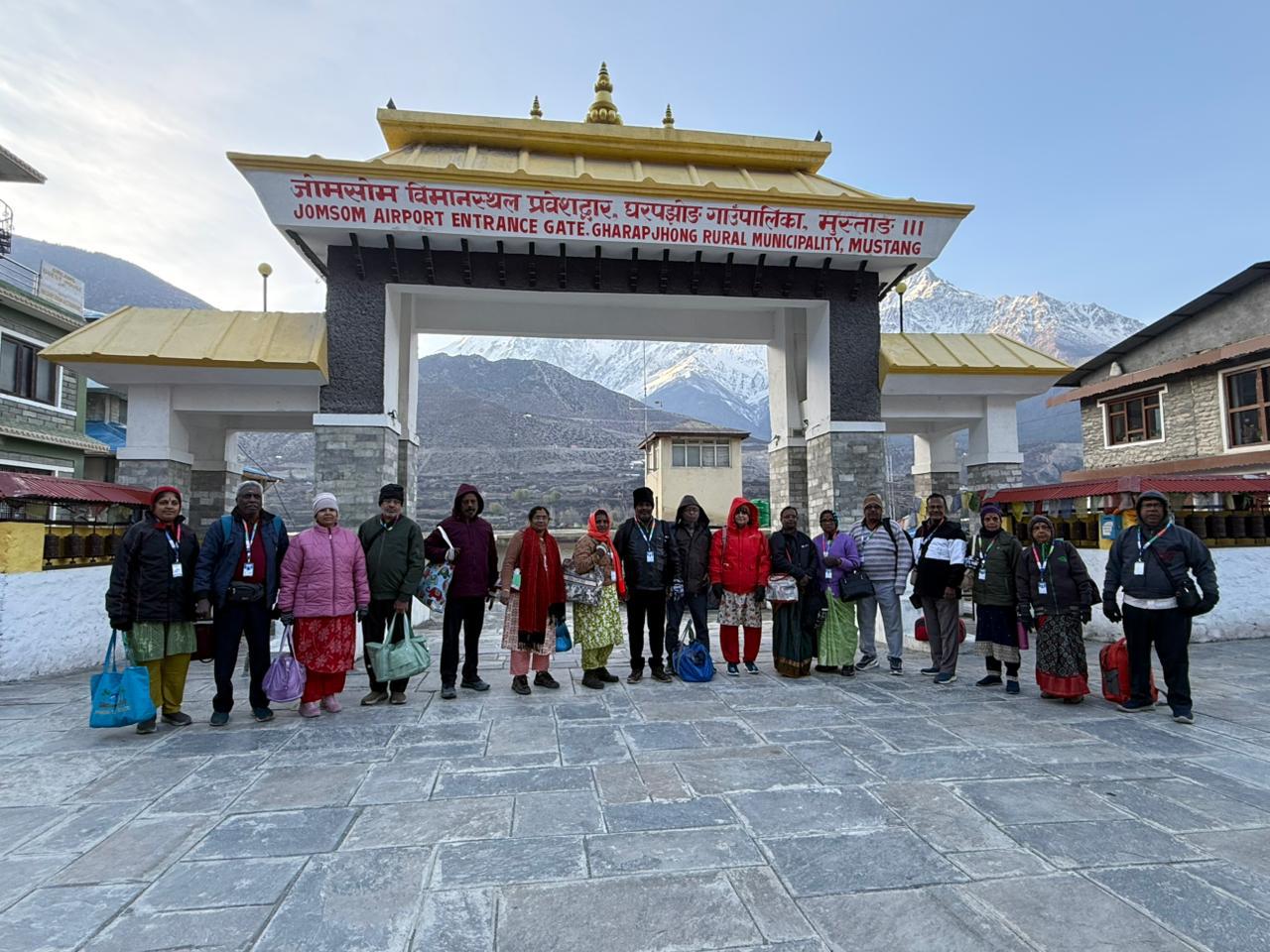
Day 07: Fly to Jomsom & Drive to Muktinath Temple Take an early morning mountain flight from Pokhara to Jomsom. Upon landing, board a private Jeep for a scenic drive up to Muktinath Temple (3,710m). Ample time will be provided for yatris to take a holy bath under the 108 water spouts (Muktidhara), visit Jwala Mai Temple, and perform pooja/darshan. In the afternoon, drive back down to Jomsom.
Overnight: Hotel in Jomsom
Day 08: Fly to Pokhara, Sightseeing & Drive to Kathmandu After breakfast, take the morning return flight from Jomsom to Pokhara. Freshen up and proceed for half-day Pokhara sightseeing covering Bindhyabasini Temple, Tal Barahi Temple (via boat ride on Phewa Lake), Devi’s Fall, and Gupteshwor Mahadev Cave. Afterward, drive back to Kathmandu (Note: Optional 25-minute flight back to Kathmandu is also available at extra cost).
Overnight: Hotel in Kathmandu
Day 09: Final Departure After breakfast, enjoy free time until your scheduled transfer to Tribhuvan International Airport for your onward journey home.
Note on Day 08: Driving from Pokhara to Kathmandu after morning flights and sightseeing makes for a very long travel day (6–7 hours on the road). If you'd like, I can also format an option showing a Pokhara–Kathmandu domestic flight on Day 08 instead of driving, or add a Cost Includes / Excludes section for your client brochure. Let me know!
Price Included
Hotel Accommodations
- 3 nights Deluxe Hotel in Kathmandu.
- 1 Night Deluxe Hotel in Pokhara.
- 2 night Resort in Chitwan
- 1 Night Hotel in Jomsom .
- 1 Night Resort in Nagarkot .
Transportations
- Airport pick up/drop ( Hotel-Airpot-Hotel)
- Full Day Sighsteen in Kathmandu,Pokhara and in Chitwan
- Kathmandu-Chitwan-Pokhara-Kathmandu surface transfer.
- Pokhara-Jomsom-Pokhara both ways Air Ticket.
- Jomsom –Muktianth-jomosm Jeep (sharing) transport .
Meal Plan
- Breakfast in Kathmandu and Pokhara and Full Board Meal in Chitwan and in Jomsom (Veg-Non Veg) according to client choice
- English/ Hindi Speaking Nepali Guide, ACAP-Muktinath permit .
- National park entrance fee and all tickets, Cultural show tickets .
Price Excluded
- Sightseeing entrance Fee and Manakamana cable car tickets.
- Pony / horse riding fee In Muktinath Temple .
- Tips, Personal expenses (beverage, phone call, cold drink).
- International tickets, travel insurance
Trip Booking Enquiry / Customize
Fields marked with ( * ) are mandatory.
Tour Gallery
CONTENT HERE
Popular Tour Packages
We organize your dream trip with a wide range of popular tour packages.
 Popular
16 Days
16-Day Kailash Mansarovar Tour via Chengdu - 2027
 Popular
13 Days
13 Days Kailash-Manasarovar Trip Ex - Kathmandu 2027
 Popular
15 Days
Touch Kailash Tour 2027
 Special Offer
10 Days
Special Nepal Tour
 Special Offer
11 Nights / 12 Days
 Special Offer
5 Nights / 6 Days
Kathmandu - Pokhara - Muktinath Tour
 Popular Package
16 Days
 HOT OFFER
11 Days Trip
 POPULAR PACKAGE
09 Nights / 10 Days
 Popular Package
9 Days
 Best Seller
14 Nights / 15 Days
 Popular Package
8 Nights / 9 Days
 HOT OFFER
11 Nights / 12 Days
 Best Seller
12 Nights / 13 Days
 Best Seller
5 Nights / 6 Days
 Best Seller
9 Nights / 10 Days
 Special Offer
7 Nights / 8 Days
Buddhist Cultural Tour
 HOT OFFER
18 Days Trip


